
We recognize that the Sacraments have a visible and invisible reality, a reality open to all the human senses but grasped in its God-given depths with the eyes of faith.
~ United States Conference of Catholic Bishops
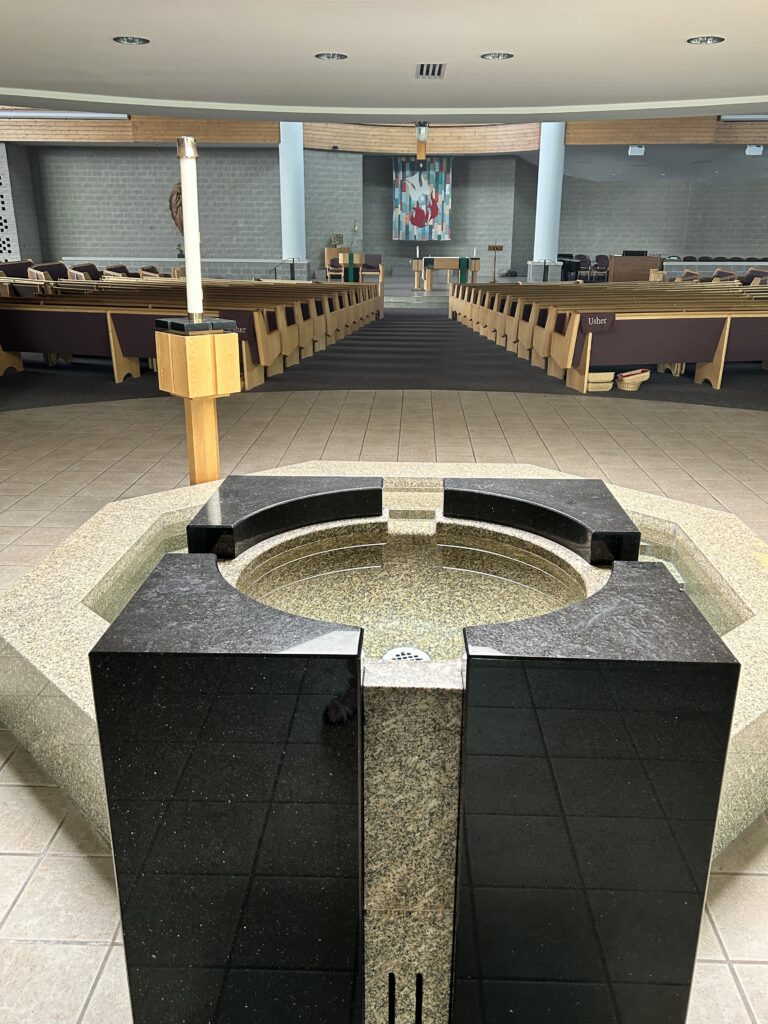
Baptism
“Go, therefore, make disciples of all nations; baptizing them in the name of the Father and of the Son and of the Holy Spirit, teaching them to observe all that I have commanded you” (Matthew 28:19-20).
The origin and foundation of Christian Baptism is Jesus. Before starting his public ministry, Jesus submitted himself to the baptism given by John the Baptist. The waters did not purify him; he cleansed the waters. . . . Jesus did not need to be baptized because he was totally faithful to the will of his Father and free from sin. However, he wanted to show his solidarity with human beings in order to reconcile them to the Father. By commanding his disciples to baptize all nations, he established the means by which people would die to sin – Original and actual – and begin to live a new life with God.
In Baptism, the Holy Spirit moves us to answer Christ’s call to holiness. In Baptism, we are asked to walk by the light of Christ and to trust in his wisdom. We are invited to submit our hearts to Christ with ever deeper love.
Confirmation
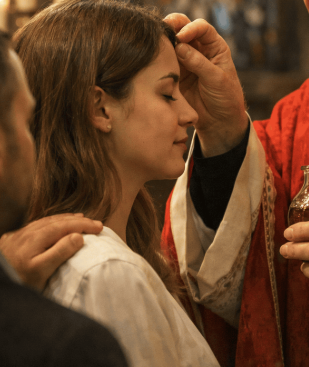
1302 It is evident from its celebration that the effect of the sacrament of Confirmation is the full outpouring of the Holy Spirit as once granted to the apostles on the day of Pentecost.
1303 From this fact, Confirmation brings an increase and deepening of baptismal grace:
– it roots us more deeply in the divine filiation which makes us cry, “Abba! Father!”;
– it unites us more firmly to Christ;
– it increases the gifts of the Holy Spirit in us;
– it renders our bond with the Church more perfect;
– it gives us a special strength of the Holy Spirit to spread and defend the faith by word and action as true witnesses of Christ, to confess the name of Christ boldly, and never to be ashamed of the Cross:
Recall then that you have received the spiritual seal, the spirit of wisdom and understanding, the spirit of right judgment and courage, the spirit of knowledge and reverence, the spirit of holy fear in God’s presence. Guard what you have received. God the Father has marked you with his sign; Christ the Lord has confirmed you and has placed his pledge, the Spirit, in your hearts.
Eucharist
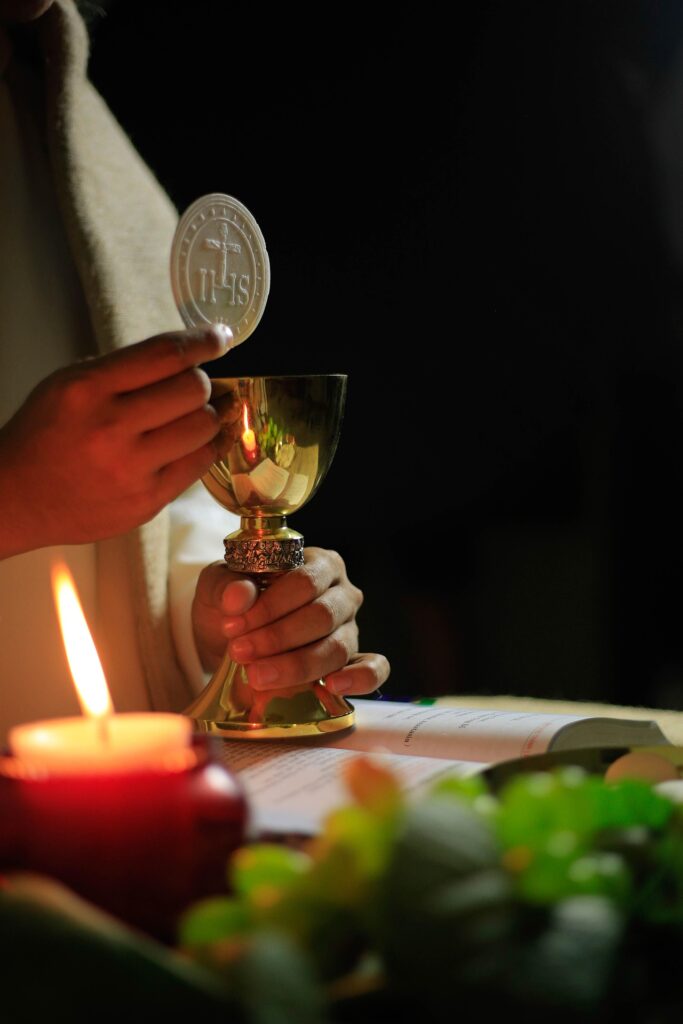
Recalling these words of Jesus, the Catholic Church professes that, in the celebration of the Eucharist, bread and wine become the Body and
Blood of Jesus Christ through the power of the Holy Spirit and the instrumentality of the priest. Jesus said: “I am the living bread that came down
from heaven; whoever eats this bread will live forever; and the bread that I will give is my flesh for the life of the world. . . . For my flesh is true
food, and my blood is true drink” (Jn 6:51-55). The whole Christ is truly present, body, blood, soul, and divinity, under the appearances of bread
and wine—the glorified Christ who rose from the dead after dying for our sins. This is what the Church means when she speaks of the “Real
Presence” of Christ in the Eucharist.
Reconciliation
Reconciliation goes by other names as well: Confession and the Sacrament of Penance. It is one of the healing sacraments of the Church and assists the continual conversion of the faithful.
“The whole power of the sacrament of Penance consists in restoring us to God’s grace and joining us with him in an intimate friendship. Reconciliation with God is thus the purpose and effect of this sacrament.”
~ Catechism of the Catholic Church, 1468
Matrimony
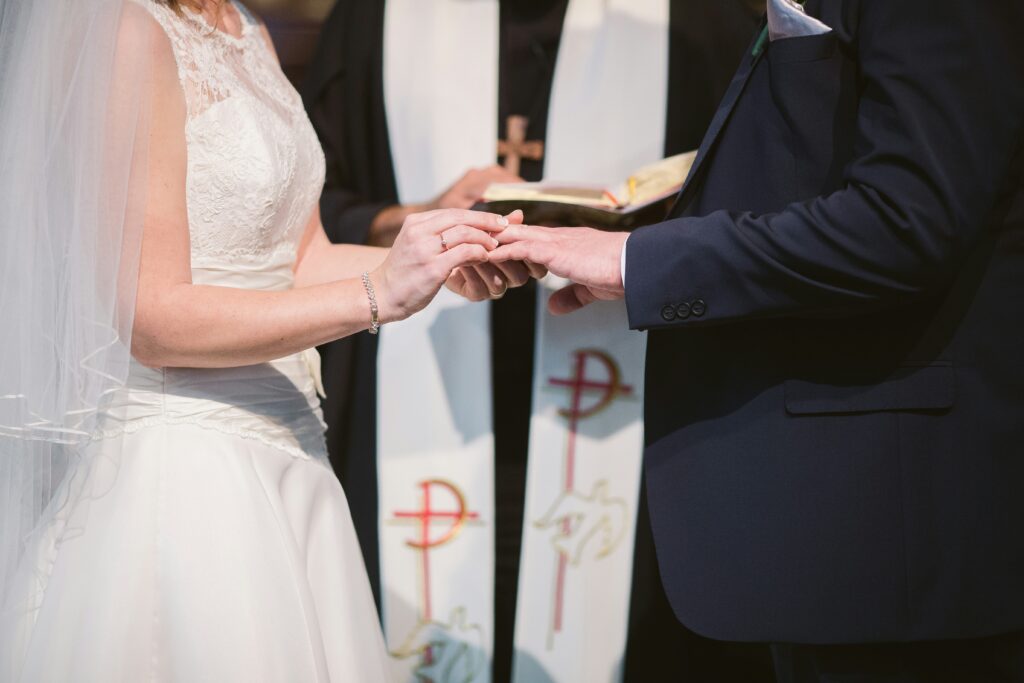
Sacred Scripture begins with the creation and union of man and woman (Genesis) and ends with “the wedding feast of the Lamb” (Rev 19:7, 9). Scripture often refers to marriage, its origin and purpose, the meaning God gave to it, and its renewal in the covenant made by Jesus with his Church. Man and woman were created for each other.
By their marriage, the couple witnesses Christ’s spousal love for the Church. One of the blessings in the liturgical celebration of marriage refers to this in saying, “Father, you have made the union of man and wife so holy a mystery that it symbolizes the marriage of Christ and his Church.”
Anointing of the Sick
When the Sacrament of Anointing of the Sick is given, the hoped-for effect is that, if it be God’s will, the person be physically healed of illness. But even if there is no physical healing, the primary effect of the Sacrament is a spiritual healing by which the sick person receives the Holy Spirit’s gift of peace and courage to deal with the difficulties that accompany serious illness or the frailty of old age. The Holy Spirit renews our faith in God and helps us withstand the temptations of the Evil One to be discouraged and despairing in the face of suffering and death. Also, a sick person’s sins are forgiven if he or she was not able to go to Confession prior to the celebration of the Sacrament of the Anointing of the Sick.

Holy Orders
The ministerial or hierarchical priesthood of bishops and priests, and the common priesthood of all the faithful participate, “each in its own proper way, in the one priesthood of Christ.” While being “ordered one to another,” they differ essentially. In what sense? While the common priesthood of the faithful is exercised by the unfolding of baptismal grace – a life of faith, hope, and charity, a life according to the Spirit – the ministerial priesthood is at the service of the common priesthood. It is directed at the unfolding of the baptismal grace of all Christians. The ministerial priesthood is a means by which Christ unceasingly builds up and leads his Church. For this reason it is transmitted by its own sacrament, the sacrament of Holy Orders.
~ Catechism of the Catholic church, 1547